What temperature should I set my Sub-Zero refrigerator to?
Leave the fresh-food section at 38°F and the freezer at 0°F; those factory targets hold food below the 40°F safety line without frosting produce or overworking the compressor.

Temp Settings · 4 min read
The correct Sub-Zero set points for Foster City: 38°F fridge, 0°F freezer, why lagoon humidity fools owners, and how to read real drift from a defrost swing.
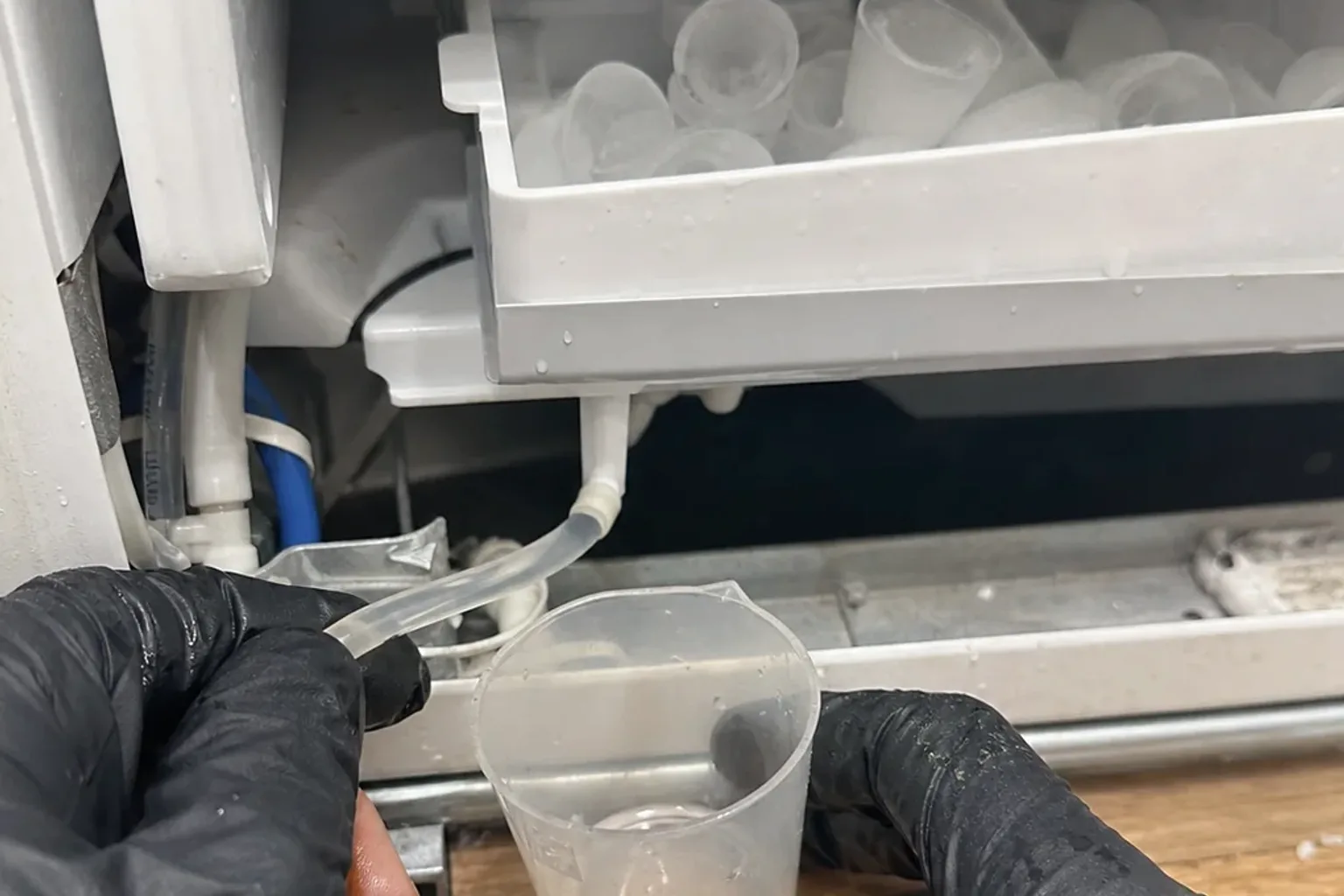
A Sub-Zero built-in is engineered to run 20 years or more, and for nearly all of that lifespan its factory targets — 38°F in the fresh-food section and 0°F in the freezer — are exactly where a Foster City kitchen should leave them. Owners near the lagoon often nudge those dials colder after spotting door-sweat or a warm shelf, then mistake a routine defrost swing for a failing compressor. This guide follows the decision tree a technician uses: confirm the set point, rule out humidity, read the real drift, then call it 'not cooling.'
Sub-Zero engineers set the fresh-food section to 38°F and the freezer to 0°F because those numbers hold food below the 40°F spoilage line while leaving margin that a normal defrost swing never crosses. Foster City owners who crank the dial down to 34°F rarely gain freshness; they invite frozen lettuce, iced-over drains, and a compressor that runs too long. The dual-compressor design keeps each zone independent, so the factory 38°F and 0°F targets are right for nearly every built-in in the city.
Homes ringing the Foster City lagoon sit in damp, salt-tinged air, and that moisture condenses on the coolest surface it reaches — often the stainless door and gasket of a Sub-Zero built-in. Great-room kitchens make it worse, since an open floor plan lets humid cooking air drift straight onto the 38°F door panel. Owners read that surface sweat as a cooling failure and drop the set point, when the real fix is airflow and a dry gasket, not a colder box, and easing kitchen humidity clears most sweat without touching the dial.
Sub-Zero built-ins run an automatic defrost several times a day, and each cycle briefly warms the fresh-food reading a few degrees before the compressor pulls it back to 38°F — that recovery is normal, not drift. Real drift looks different: the number climbs and stays up, creeping past 45°F and never returning, or the freezer abandons 0°F for good. Watching a thermometer over a full day separates the two, since a defrost swing recovers within the hour while true drift only worsens and never recovers.
Genuine reasons to move a Sub-Zero off its 38°F and 0°F targets are rare, and almost all are seasonal or load-driven rather than mechanical. Packing the freezer full for a holiday can justify a single-degree nudge, but the dial should return to 0°F once the load normalizes. Placing a thermometer on the middle shelf for 24 hours before you touch anything keeps you from chasing a number that was never wrong.
Dropping a Sub-Zero fresh-food zone from 38°F to 34°F trades imagined freshness for real trouble: produce freezes solid, drains ice up, and the compressor runs far longer. Freezers pushed below 0°F frost faster and can jam an ice maker's fill cycle. Each over-adjustment also masks whatever symptom sent the owner to the dial, so a weak gasket or blocked vent keeps degrading while the colder setting hides it. Returning both zones to the factory 38°F and 0°F targets is often the first repair needed.
Once the set point is confirmed and humidity ruled out, a fresh-food zone that still will not hold 38°F points at the temperature sensor rather than the dial. A drifting thermistor reports the wrong number to the control board, so the box overcools or coasts warm while the display looks fine. A technician confirms this by comparing the probe reading to the control's commanded value, a check that runs $280–$640 for the model-matched part; a broader temperatures, airflow and lower-grille inspection runs $165–$245.
Confirming the set point, wiping a wet gasket, and logging a thermometer for a day are all safe do-it-yourself steps that resolve most Foster City temperature worries before any part is ordered. Anything past that — a suspected sensor, a sealed-system read, or a zone that abandons 0°F — belongs with a technician, since opening the control or refrigerant path carries real risk. A diagnostic visit is $89, credited toward the repair, and a full zone sensor, airflow and door-seal diagnosis runs $390–$1150 when the fault is real hardware.
Leave the fresh-food section at 38°F and the freezer at 0°F; those factory targets hold food below the 40°F safety line without frosting produce or overworking the compressor.
Yes; an automatic defrost lifts the fresh-food reading a few degrees several times a day, then recovers within the hour. A steady climb past 45°F is real drift, not a defrost swing.
A diagnostic visit is $89, credited toward the repair; a temperatures and airflow check runs $165–$245, and a probe reading compared to the control runs $280–$640. If it needs a pro, Foster City Sub-Zero Repair is at (650) 629-1050.
Have the failing compartment and model number ready, and you will get a real first opinion — not a sales pitch.
I had talked myself into believing our Sub-Zero was dying because the shelf felt warm, and I'd dropped the setting all the way to 34. Steve showed me it was just a defrost swing and reset both zones to the factory 38 and 0. No part, no drama, and it has held perfectly since.
Our door gasket sweats every summer out here by the lagoon and I was sure the fridge had a leak. The diagnosis was spot on — humidity, not a failing compressor — and he walked me through drying the gasket. Only reason for four stars is the first appointment window slipped a bit, but the work itself was honest.
The fresh-food side kept creeping past 45 no matter where I set the dial. Turned out to be a drifting temperature sensor, which he confirmed by metering the probe against the control before quoting anything. Clear, fair, and he never once tried to sell me a part I didn't need.
| Factory fresh-food target | 38°F, the correct Sub-Zero setting |
|---|---|
| Factory freezer target | 0°F |
| Real drift vs defrost | a steady climb past 45°F, not a brief swing |
| Diagnostic service call | $89, credited toward the repair |
| Local help | Foster City Sub-Zero Repair — (650) 629-1050 |
Need this handled? Sub-Zero Not Cooling Diagnostic Guide for Foster City · Sub-Zero Wine Storage Temperature Drift in Foster City